[PART 2] 100 Years of Aerosols: Stories Behind the Spray
October 6th, 2026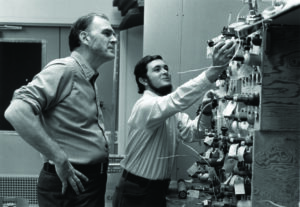
Part 2 — New challenges, new solutions
1974–2026: New demands shape the next era of aerosol innovation
By the **mid-**1970s, aerosols had become woven into daily routines. Then, in 1974, research by Mario Molina and Sherwood Rowland raised serious concerns about the impact of chlorofluorocarbons (CFCs) on the ozone layer. Many aerosols used CFCs as propellants at the time and soon found themselves at the centre of growing environmental scrutiny.
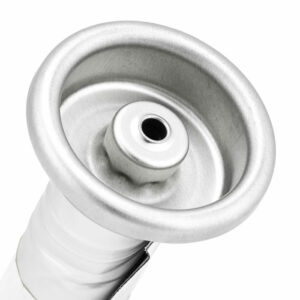
For an industry built on dispensing products under pressure, changing the propellant was no small matter. Propellant, formulation, valve and actuator all influence how an aerosol performs. The challenge was not simply to replace one ingredient, but to make the complete system work differently.
Rethinking the aerosol
The industry responded by moving towards alternative propellants. The 1987 Montreal Protocol marked a major international commitment to controlling ozone-depleting substances, and by the end of 1989, most aerosols produced in Europe no longer contained CFC propellants; only a few industrial products and metered-dose inhalers continued to use them.
Another important development was the growth of barrier-pack technologies such as Bag-on-Valve (BOV). Instead of mixing product and propellant, BOV places the formulation inside a sealed flexible bag, with compressed air or nitrogen between the bag and the can providing the pressure to dispense it. The separation opened new opportunities for formulations and applications.
BOV systems became particularly well established in applications such as post-foaming shaving gels, and subsequently gained ground in healthcare, cosmetics and food. More recently, they have also been adopted for products such as edible oils, where separation from the propellant, protection from air and controlled dispensing offer clear advantages.
More than a can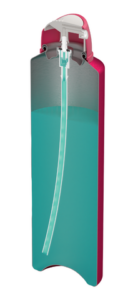
Through the 1990s and beyond, aerosol technology continued to evolve. Valves and actuators became increasingly sophisticated, offering greater control overflow, dosage, spray pattern and the overall dispensing experience. At the same time, recycling, material reduction and other environmental considerations became increasingly important.
Today, an aerosol is best understood as a complete dispensing system. Valve, actuator, formulation and propellant need to work together to deliver the required performance. And as interest grows in compressed gases and other alternatives, the engineering challenge continues to change.
A century after Rotheim’s original Norwegian patent application, the aerosol has shown a remarkable ability to adapt. New challenges have repeatedly led to new solutions — and new possibilities for what happens behind the spray.
Sources & further reading:
PART 2:
- Nobel Prize — Molina & Rowland / ozone science
- UNEP Ozone Secretariat — Montreal Protocol
- European Aerosol Federation — Highlights on Aerosol History
- AEDA — History of Aerosols
- BAMA — Future of Aerosols